



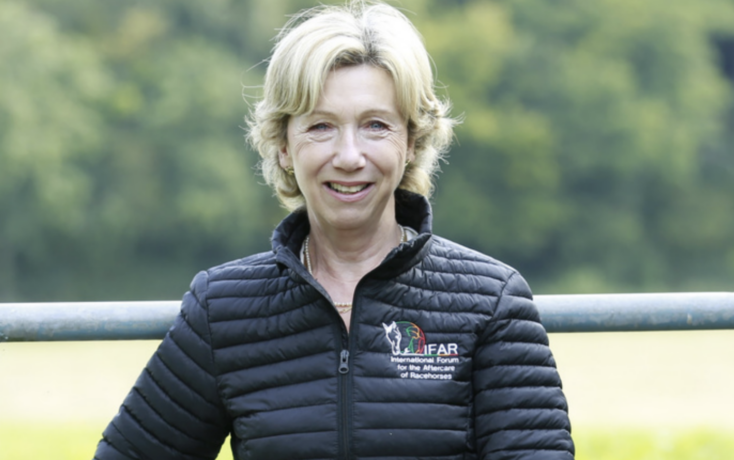
With IFAR Chair Di Arbouthnot quoting “there’s something good about the outside of a horse that’s good for the inside of a man,” it was Dr Eliott Forbes at the 23rd ICRAV in Hong Kong.
Racehorse welfare featured at the International Federation of Horseracing Authorities Conference in Paris this month, being attended by members of regulatory bodies from around the world.
Including a focus on racehorse aftercare, the French aftercare organisation Au-Delà des Pistes went onto raised €45,000 from its ‘Arc Promise’ which gives six months support for 50 horses.
Will the US Thoroughbred Aftercare Alliance also support the IFRA activities at the 40th Breeders’ Cup World Championships and the Japan Racing Association with the Japan Cup in November.
Yes, it’s all happening in the expanding world of the International Federation of The Aftercare of Racehorses, and now it’s the Korea Racing Authority with the ‘Honored Retired Racehorses.’
In November a farm for the retirement of champion racehorses will be established with the Nonghyup Agribusiness Group Inc. for aftercare as well as developing businesses for horse welfare.
As the largest livestock corporation in South Korea with sales of US$7.8 billion in 2022, he Nonghyup Agribusiness Group will develop the new facility at The Nonghyup Anseong Farmland.
A subsidiary of the Nonghyup Agribusiness Group, it’s a theme park of over 50 species of domesticated animals and seasonal flower landscapes that estimated to attract 800,000 visitors this year.
Following the visit to Living Legends, during IFAR and ARC in Melbourne this February, the KRA and The Nonhyup Agribusiness Group have discussed a facility for the aftercare in Korea.
The KRA has established the selection system criteria for “Honored Retired Racehorses” with the support of domestic Racehorse Owners Associations and associated animal bodies.
With the primary criteria focusing on horses who have difficulties finding second careers, the horse’s racing accomplishments and potential are considered when the application is submitted.
The 9-year-old Kentucky bred gelding Cheongdam Dokki was the first racehorse selected as being highly popular with the racing fans having earned over $3 million in stakes in Korea.
The KRA plans to support a total of 10 retired horses until 2027, and will then review the business performance to expand this model on the collaboration of the private sectors.
The KRA is committed to developing a lifecycle-based welfare system with a new organisation for equine welfare in 2022 to boosted equine welfare with the Racehorse Owners’ Associations.
Furthermore, the KRA is expanding its transitioning and retraining program, rehabilitative support for injured racehorses, and support for more riding competitions for retired racehorses.
In fact, the vision of the International Federation for The Retirement of Racehorses features-
- All horses are treated in a humane and ethical manner every day of their life.
- All suitable horses find a home after racing.
- Every industry participant, administrator, owner and breeder recognise and embraces their responsibility towards Thoroughbred aftercare.
- All racing jurisdictions have effective and well-funded aftercare, traceability and education programmes in place.
- Thoroughbreds are valued and sought-after athletes by the equestrian community.
- IFAR leads a highly-engaged and global community of horse professionals advocating for Thoroughbred aftercare.

FREE BETS – Claim $1000’s in Bonus Bets at the TOP Betting Sites
We take a look at the BIGGEST and BEST Free Daily Racing Offers and Betting Promotions from Australia’s leading online...

8/8/2026 Horse Racing Tips and Best Bets – Caulfield
Caulfield Heath is where Victorian metro racing heads to this Saturday. The weather is fine, the track is soft (6)...

8/8/2026 Horse Racing Tips and Best Bets – Randwick, Missile Stakes day
Spring is in the air this Saturday at Randwick, with the Missile Stakes (1200m) highlighting a strong ten race program....

8/8/2026 Horse Racing Tips and Best Bets – Eagle Farm
Eagle Farm will conduct a nine event program on Saturday. The weather is fine, the track is soft (5) and...

8/8/2026 Horse Racing Tips and Best Bets – Belmont, Belmont Newmarket day
The Belmont Winter Carnival continues this Saturday, headlined by the Belmont Newmarket (1200m). The weather is fine, the track is...

New Betting Sites Australia + Top List Bookmaker Apps $$$
Betting in Australia has never been more popular thanks to a large increase in new betting Agencies and Apps available...

Australian Bookmaker Reviews – Online Bookie Ratings $$
Which bookmaker should you bet with? We Review each of the leading online Australian Bookmakers and rate them in order...

Top 10 – Funniest Race Horse Names
Horse racing. Known as the ‘Sport Of Kings’, an industry worth billions, a very serious business…but to some, it’s a...

Melbourne Cup
The Melbourne Cup always approaches fast, with the 2026 edition commencing at 3pm, Tuesday 4th November. The race that stops...
Racing Offers
Featured News


Betting News