


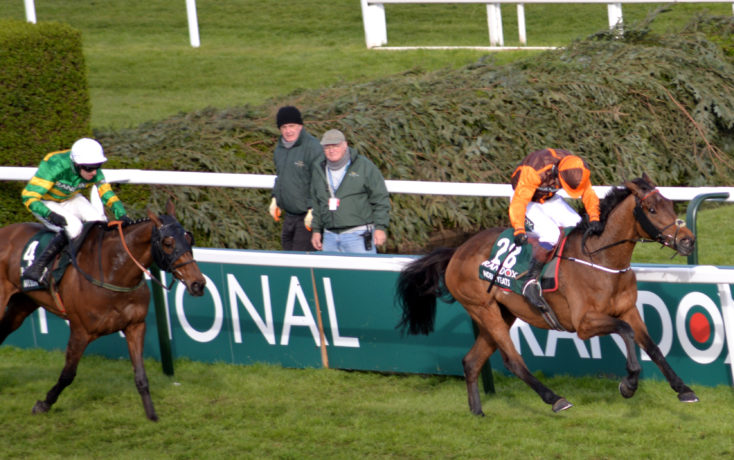
There is something about the Grand National at Aintree, Liverpool, that seems to mystically produce a heart-warming story year after year. Last year we had the win of Rachael Blackmore, the first lady jockey to win the race and hers was just the latest in a very long line of wonderful stories that weave their way through the fabric of the world’s greatest steeplechase.
In the build-up to the 2022 renewal everyone was focussed on the story of Snow Leopardess, the mare who’d had a foal three years previously and had returned to racing with enthusiasm enough that she’d found herself among the favourites for the big race.
But, as so often happens, there was another story, less obvious but no less compelling, destined to write itself into history.
Sam Waley-Cohen has been the leading amateur rider in the UK for a decade and a half. During that time he’d won six times over the Grand National fences and had reached the pinnacle at Cheltenham, winning the Gold Cup on Long Run. The National had always eluded him despite his wealthy family sourcing horses specifically with this prize in mind.
Approaching his 40th birthday, Waley-Cohen decided enough was enough. Age and the constant quest to stay fit enough to compete with the professionals, along with a business life which placed increasing demands on his time (Waley-Cohen is founder and CEO of a group of dental practices in the UK) meant that the time had come for him to draw a curtain on his successful career.
But he had decided on one final hurrah. A horse, Lord Yeats, bought recently by his father with the National in mind would be the horse he would bow out on. The horse was a novice, in his first season of chasing. He’d raced in a bumper (a National Hunt flat race) as recently as 14 months ago and was only seven, the last seven-year-old to win the National was over 70 years ago. The bookmakers, and the public, didn’t give him much of a chance, he went off at 50/1, and the view of most racing pundits was that Noble Yeats had too many negatives to overcome.
But no one told the horse, or the jockey. And Aintree worked its magic.
In the race Noble Yeats was held up out the back for much of the first circuit. As they made their way past the stands Waley-Cohen, a master at riding this unique track, gradually made up ground on the inside and by the time they jumped the first fence on the second circuit he was on the heels of the leaders.
Coming to the second last he was at the front but looming alongside him were two challengers from the head of the betting, Delta Work and the favourite Any Second Now. Delta Work, who’d defeated dual Grand National winner Tiger Roll at Cheltenham on his last start, was first to capitulate and as they reached the last Noble Yeats had only Any Second Now to beat.
Any Second Now had finished third in the race after a troubled run in 2021 and just after they jumped the last he appeared to make a decisive move, sent for home and taking a three quarter length advantage. But Noble Yeats and Waly-Cohen weren’t for being beaten and as they approached the elbow leading to the final straight they’d worked their way back alongside his rival. Racing up the final furlong, where hearts have been broken so often in the past, Noble Yeats forged ahead and made sure that Waley-Cohen’s final act on the biggest racing stage would be a glorious one.
In 2020 the race was abandoned due to the COVID pandemic and in 2021 took place behind closed doors. As Aintree celebrated the return of crowds the great race once again provided a result and a story more than worthy of the occasion.