



Peter Moody’s training business could “go down the gurgler” if his cobalt case is not resolved before the January yearling sales, a tribunal has heard.
Moody typically spends $5-6 million at the sales but faces a minimum three-year ban from training if found guilty of intentionally administering cobalt to affect a horse’s performance in a race.
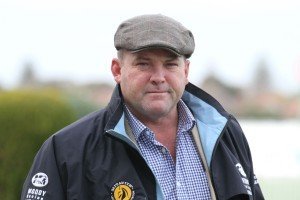
Peter Moody
Moody’s barrister Matthew Stirling said the yearling sales dictated whether Moody’s business could continue.
“Mr Moody if the hearing was adjourned would suffer serious irreparable prejudice because he has to get his chequebook out in January,” he told the Racing Appeals and Disciplinary Board on Thursday.
“His business would go down the gurgler.”
Moody does not rely on client orders to dictate his multi-million dollar buys at the yearling sales, purchasing horses and working out later whether they can be sold.
“It’s probably $5-6 million and somewhere in the vicinity of $2-3 million in the first 10 days of January,” Moody said.
His wife is a substantial owner of horses in the Moody stable where the shares cannot be sold, Mr Stirling said.
After the RAD Board allowed Racing Victoria to introduce further evidence to respond to new defence arguments, stewards’ barrister Jeff Gleeson QC said it was now impossible to complete the evidence this week.
He said even if closing submissions were heard on Monday, he would be surprised if the board would be able to deliver its decision in time for Moody to go to the Magic Millions sale in early January.
Both sides were also likely to consider appeals meaning the uncertainty over Moody’s future was simply unavoidable, Mr Gleeson said.
Moody has pleaded not guilty over Lidari’s elevated cobalt readings following his second in the 2014 Turnbull Stakes.
Mr Stirling has said a stablehand mistakenly gave Lidari large doses of oral hoof treatment Availa – at seven times the manufacturer’s recommended dose – and Moody played no part in it.
The defence is arguing a breach of contract after Racing Victoria overrode the official laboratory’s decision not to analyse one of Lidari’s urine samples because there was an insufficient amount.
But Mr Gleeson said stewards were explicitly entitled to be involved and Moody was told in January a sample had been split for analysis.